

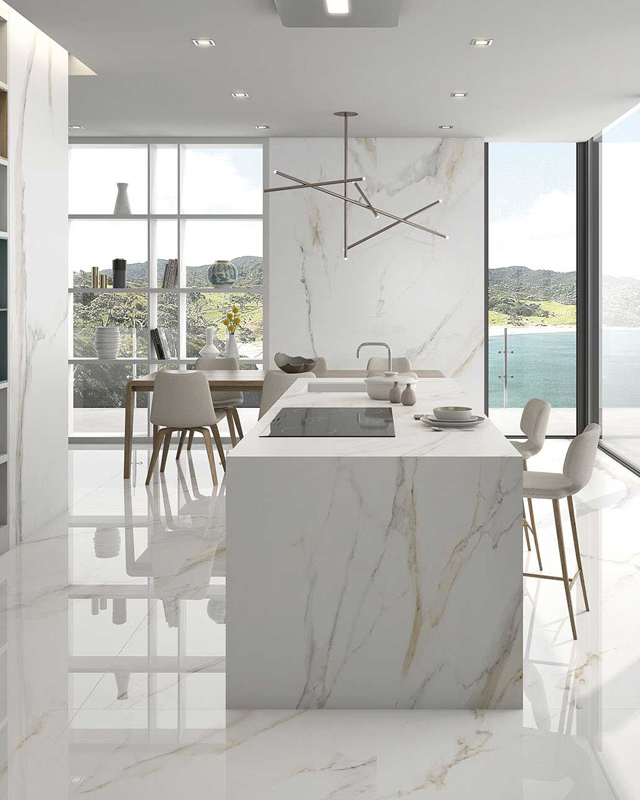



Tile Design Ideas for Modern Homes and Commercial Spaces
Tile design has changed a lot over the last few years. Homeowners now want floors and walls that look calm, clean, and current, while architects want surfaces that hold up under heavy footfall without losing their finish.
This guide brings both worlds together. It covers tile design ideas for modern homes and commercial spaces, with a clear focus on large-format porcelain, the material most projects now start with.
You will find room-by-room ideas, finish choices, colour direction, size planning, and the mistakes that quietly spoil an otherwise good design. Rollence Granito builds these tiles at scale in Morbi, so the notes here come from what actually works on real projects, not just moodboards.
Why Tile Design Decisions Matter More in 2026
A wall paint colour can be redone in a weekend. A tile layout stays for a decade or more. That single fact is why tile design deserves more planning than most people give it.
Modern interiors lean towards fewer joints, softer colours, and surfaces that read as one continuous plane. Small tiles with heavy grout lines look busy in these settings, which is why large-format porcelain has become the default across homes, showrooms, and offices.
The other shift is durability. Porcelain tiles carry very low water absorption, usually under 0.5 percent, so they resist stains, scratches, and moisture far better than older options. This matters as much in a Mumbai kitchen as it does in a hotel lobby in the Gulf.
Large-Format Porcelain as the Base of Modern Design
Most contemporary tile work starts with one decision: go large. Bigger tiles mean fewer grout lines, which makes floors and walls feel open and uncluttered.
Rollence produces large-format GVT and PGVT porcelain across sizes that suit both residential and commercial jobs. As one of the established porcelain tiles manufacturers in India, the range spans compact rooms to full lobby floors.
Common Large-Format Sizes and Where They Fit
Different sizes solve different problems. A size that looks right in a small flat can look mean in a double-height showroom.
|
Size (mm) |
Best suited for |
Why it works |
|---|---|---|
|
600 x 600 |
Bedrooms, small kitchens, balconies |
Easy to handle, low wastage in compact rooms |
|
600 x 1200 |
Living rooms, feature walls |
Balanced proportion for most Indian homes |
|
800 x 1600 |
Open-plan living, retail floors |
Fewer joints across wide spans |
|
1000 x 1000 |
Offices, mid-size lobbies |
Clean grid, quick to lay |
|
1200 x 1200 |
Commercial floors, large living areas |
Strong, square format for high footfall |
|
1200 x 1800 |
Feature walls, façades, hospitality |
Slab-like look with minimal joints |
Buyers exporting to the Gulf often ask for the bigger formats. Rollence supplies these as a 1200x1200 porcelain tiles supplier in iraq and as a 1200x1800 porcelain tiles manufacturer in iraq for projects that need slab-scale surfaces.
Residential Versus Commercial Demands
Homes and commercial sites ask different things from the same tile. A home wants warmth and low upkeep. A commercial floor wants abrasion resistance and slip safety first.
For high-traffic commercial areas, matte or natural finishes with better grip make more sense. For homes, you have room to play with gloss, marble looks, and softer colours.
Tile Design Ideas for Modern Homes
Every room in a home has its own rules. Below are practical directions that work in Indian 2BHK and 3BHK layouts as well as larger villas.
Living Room
The living room sets the tone for the whole house. A large-format marble-look floor in a soft beige or grey gives a quiet, open base that furniture sits well against.
Keep the floor calm and let one wall carry the character. A Statuario or Onyx feature wall behind the TV unit adds depth without making the room feel heavy.
For colour pairing help, our guide on best tile colour combinations for living rooms breaks down floor and wall combinations that hold up over time.
Kitchen
Kitchens take heat, oil, and daily scrubbing, so the tile has to be tough as well as good looking. Large-format porcelain on the floor reduces joints, which means fewer places for grime to settle.
A continuous countertop-to-wall porcelain surface behind the hob looks clean and wipes down easily. Our detailed piece on kitchen tile design ideas using large-format porcelain tiles covers layouts, backsplash ideas, and slab use.
Bathroom
Bathrooms are where finish choice really shows. Glossy tiles bounce light and make small bathrooms feel bigger, while natural finishes give a spa-like, grounded feel.
A common modern approach is glossy on the walls and a matte, slip-resistant surface on the floor. Our guide to bathroom tile design trends using glossy and natural finishes explains how to mix the two without clashing.
Bedrooms and Foyers
Bedrooms suit warm, soft tones that feel restful. Beige and crema marble looks in 600 x 1200 or 800 x 1600 keep the room calm.
Foyers get the first look from any guest, so this is where a bolder marble-look or a darker Onyx floor earns its place. A strong entry sets up the rest of the home.
Tile Design Ideas for Commercial Spaces
Commercial projects judge tiles on performance first and looks second. Still, the two can meet when the material is right.
Showrooms and Retail
Retail floors need to look premium and survive trolleys, heels, and constant foot traffic. Large 1200 x 1200 porcelain in a light neutral keeps the space bright and makes products stand out.
Glossy finishes work well in showrooms where you want reflection and shine. For export retail projects in North Africa, Rollence acts as a 1200x1200 porcelain tiles supplier in egypt, supplying formats sized for big open floors.
Offices and Lobbies
Corporate interiors lean towards grey, silver, and muted marble looks that read as serious and clean. A 1000 x 1000 or 1200 x 1200 grid lays fast and gives a sharp, ordered floor.
Lobbies can carry one dramatic surface, usually a book-matched marble-look wall in 1200 x 1800, to give the entrance weight.
Hospitality
Hotels and restaurants want mood. Warm Onyx and Statuario surfaces under good lighting create the kind of setting guests remember.
Because hospitality footfall is heavy, natural and matte finishes are safer underfoot in wet-prone zones like pool decks and washrooms.
Finishes and How They Change a Space
The same tile in two finishes can feel like two different products. Choosing the finish is as important as choosing the colour.
|
Finish |
Look and feel |
Best rooms |
|---|---|---|
|
Glossy |
Bright, reflective, opens up small rooms |
Living rooms, showrooms, bathroom walls |
|
High Gloss |
Deep shine, mirror-like on dark colours |
Feature walls, retail |
|
Matte / Natural |
Soft, non-reflective, better grip |
Bathroom floors, outdoor, high-traffic areas |
Most balanced projects use two finishes, not one. Gloss where you want light, matte where you want grip.
Colour and Series Direction
Colour drives the emotional read of a space more than any other choice. A cool grey office feels sharp and formal, while a warm beige home feels welcoming.
If you want to understand why certain colours suit certain rooms, our guide on tile colour psychology for interior spaces goes deep into the subject.
Rollence organises its range into series such as Statuario, Grey/Silver, Beige/Crema, Onyx, and Natural, which makes it easier to pick a colour family and stay consistent across rooms.
How Designers Plan All This Together
Pulling floors, walls, colours, and finishes into one coherent scheme is where projects usually slip. Designers solve this with concept boards that group compatible tiles before a single box is ordered.
Our walkthrough on how designers use Rollence concept boards for projects shows how this planning step saves time and avoids costly mismatches.
Common Mistakes to Avoid
A few repeat errors show up on site again and again. Knowing them upfront saves money and rework.
-
Mixing too many colours and finishes in one room, which makes the space feel restless.
-
Using glossy floors in wet areas, where they turn slippery and unsafe.
-
Ordering small tiles for large rooms, which adds grout lines and shrinks the space visually.
-
Skipping the dry-layout step, which leads to awkward cuts at edges and doorways.
-
Forgetting to order 5 to 10 percent extra tiles from the same batch for future repairs.
Expert Tips for Better Tile Design
Small habits separate a clean finish from an average one. These carry across homes and commercial jobs alike.
Plan the tile before the furniture, not after, so the floor and layout support each other. Always view a full tile in daylight, since colours read differently under showroom lights.
Match grout colour to the tile for a seamless floor, or contrast it deliberately if you want a grid pattern. Keep one material family running across connected rooms so the home flows as one.
Planning Your Next Project
Good tile design is really about a few clear decisions made in the right order: size first, then finish, then colour. Get those three right and the rest follows.
Rollence Granito produces large-format porcelain across the sizes, series, and finishes covered here. You can explore the full range and request samples on the Rollence website to plan your next home or commercial project with confidence.
Frequently Asked Questions
Which tile size is best for modern homes?
For most Indian homes, 600 x 1200 and 800 x 1600 give a modern, open look with fewer joints. Larger 1200 x 1200 suits bigger living areas and villas.
Is porcelain better than ceramic for design projects?
Porcelain absorbs far less water, resists scratches better, and comes in larger formats, which makes it the stronger choice for both design and durability.
What finish works best for commercial floors?
Matte and natural finishes give better grip and hide wear, which suits showrooms, offices, and hospitality floors with heavy footfall.
Can I use the same tile in a home and a commercial space?
You can, but the finish should change. Choose matte or natural for high-traffic commercial floors and keep gloss for lower-traffic residential areas.
How do large-format tiles make a room look bigger?
Fewer grout lines mean fewer visual breaks, so the eye reads the floor as one continuous plane, which makes the room feel larger.
Which colours suit modern interiors?
Soft greys, beiges, and marble-look neutrals suit most modern schemes. Darker Onyx tones work well as feature surfaces rather than full floors.
How many extra tiles should I order?
Keep 5 to 10 percent extra from the same production batch, so any future repair matches the original colour and shade.

