



What Global Buyers Look for in Porcelain Tile Manufacturers
Sourcing porcelain tiles from a new country carries real risk. A wrong choice of manufacturer can mean delayed shipments, inconsistent shade, or a rejected container at the port.
Experienced global buyers have learned to evaluate manufacturers against a fairly consistent set of criteria before placing a large order. This guide covers what global buyers look for in porcelain tile manufacturers, and how to check each factor before committing. It sits under our pillar on porcelain tiles for commercial and export projects.
Certification: The First Filter
Certification is usually the first thing a serious buyer checks, because it is the fastest way to rule out unreliable suppliers. ISO 9001 for quality management and ISO 14001 for environmental management are the baseline most buyers expect.
Beyond these, buyers often ask for product-specific test reports covering water absorption, breaking strength, and slip resistance, matched against the standards required in their own market.
Production Capacity and Consistency
A manufacturer might make a beautiful sample tile, but a large order tests something different: can they produce the same quality and shade across tens of thousands of square metres, on schedule.
Buyers typically ask about monthly production capacity, current order backlog, and how batch consistency is managed across large runs. A factory that cannot show clear answers here is a risk for any sizeable order.
Batch and Shade Consistency
Shade variation between batches is one of the most common complaints in international tile sourcing. Buyers protect against this by requesting single-batch production for a project and checking batch numbers on delivery.
Product Range and Large-Format Capability
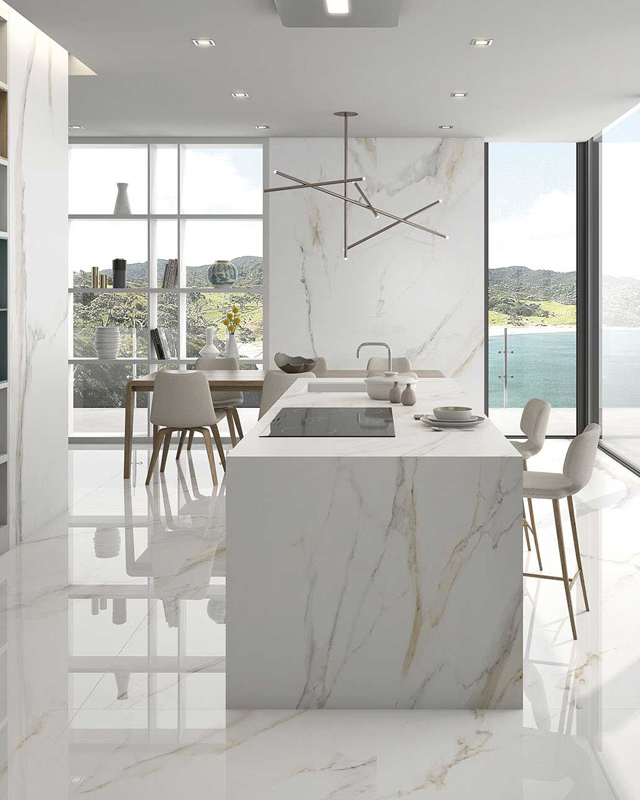
Global buyers increasingly want large-format porcelain, since big markets in the Middle East, Europe, and North Africa favour fewer joints and slab-like surfaces in retail, hospitality, and residential projects.
A manufacturer offering a wide size range from 600 x 600 up to 1200 x 1800, across multiple finishes and series, lets a buyer source an entire project from one factory instead of juggling several vendors. Rollence supplies large formats to key export markets as a 1200x1800 porcelain tiles manufacturer in iraq and as a 1200x1200 porcelain tiles supplier in egypt.
Export Experience and Track Record
Buyers weigh export experience heavily, since shipping tiles internationally involves packaging, documentation, and logistics that a purely domestic manufacturer may not have handled before.
Questions buyers commonly ask include:
-
Which countries has the manufacturer exported to before.
-
Can they provide references or completed project examples.
-
Do they understand the destination market’s import documentation requirements.
-
What is their track record on delivery timelines for export orders.
A manufacturer with established lanes to a buyer’s region, with prior shipments and project references, reduces the buyer’s own risk considerably.
Communication and Responsiveness
Large international orders involve multiple rounds of sample approval, specification changes, and shipment coordination. Buyers consistently rank clear, responsive communication as a deciding factor, sometimes above price.
A manufacturer that answers technical questions quickly and keeps a buyer updated through production and shipping tends to win repeat business, even against lower-priced competitors.
Price Versus Total Cost of Ownership
Price matters, but experienced buyers weigh it against total cost of ownership, not just the per-square-metre rate. A cheaper tile with poor packaging, inconsistent shade, or slow communication can cost more once delays and replacements are factored in.
Buyers who have sourced internationally before tend to prioritise reliability and documentation as much as price, especially on repeat or large-volume orders.
Sustainability and Compliance Credentials
Some markets, particularly in Europe and parts of the Gulf, increasingly ask about environmental compliance alongside product certification. ISO 14001 environmental management certification and clear compliance documentation are becoming standard requests, not exceptions.
A Practical Checklist for Evaluating Manufacturers
Buyers evaluating a new manufacturer for the first time can work through a short, practical list before committing to a large order.
-
Confirm ISO and product-specific certifications match your market’s requirements.
-
Ask for production capacity and current lead times in writing.
-
Request references or examples of prior export shipments to your region.
-
Order a sample batch and check shade and finish against your specification.
-
Confirm packaging standards for your shipping method before finalising.
Our detailed guide on export packaging, quality control and compliance explained expands on the packaging and QC side of this checklist.
Common Mistakes Buyers Make When Sourcing
A few recurring mistakes show up even among experienced buyers.
-
Choosing the lowest quote without checking certification against their own market.
-
Skipping a sample order before committing to full production.
-
Not confirming who bears responsibility for shade mismatches after delivery.
-
Underestimating lead time for large or custom orders.
Choosing With Confidence
Global buyers who source well treat certification, capacity, export experience, and communication as equally important as price. Checking all four before placing a large order avoids most of the problems that derail international tile sourcing.
Rollence Granito supplies large-format porcelain to export markets including Iraq and Egypt, backed by ISO certification and an established production base in Morbi. Reach out through the Rollence website to discuss your sourcing requirements.
Frequently Asked Questions
What certifications should I check before choosing a manufacturer?
Check for ISO 9001 and ISO 14001 as a baseline, along with test reports for water absorption, strength, and slip resistance relevant to your market.
How do I confirm a manufacturer’s production capacity?
Ask directly for monthly production figures, current order backlog, and how they manage batch consistency across large runs, ideally in writing.
Why does export experience matter for tile sourcing?
Manufacturers with export experience understand packaging, documentation, and destination-market requirements, which reduces delays and shipment issues.
Is the cheapest tile manufacturer always the best choice?
Not usually. Total cost of ownership, including consistency, packaging quality, and communication, often outweighs a lower per-square-metre price.
Should I order a sample before a large tile order?
Yes. A sample batch lets you verify shade, finish, and quality against your specification before committing to full production.
How can I reduce shade mismatch risk on a large order?
Request single-batch production where possible, and check batch numbers on delivery against your original sample.

