



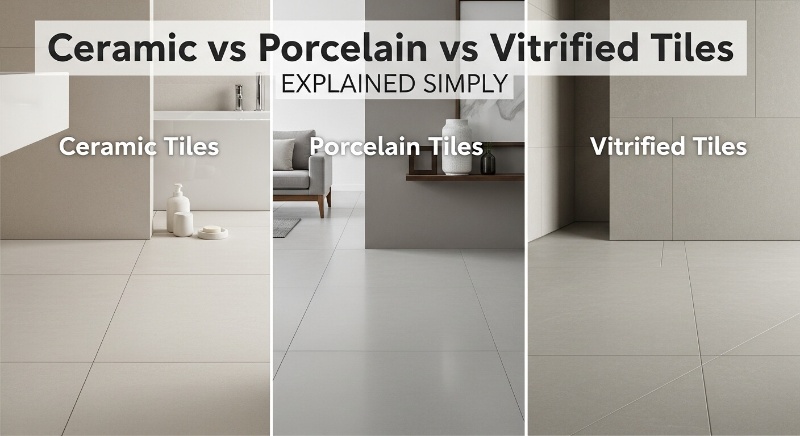
Ceramic vs Porcelain vs Vitrified Tiles: What’s the Difference?
Tiles are one of the most important materials used in modern construction. From homes and offices to malls and hotels, the right tile choice affects durability, safety, maintenance, and overall appearance.
As demand grows for large-format, premium surfaces, working with a reliable 1200x1200 porcelain tiles supplier in Egypt has become increasingly important for architects, contractors, and developers seeking quality and consistency.
Among the most commonly used options today are ceramic tiles, porcelain tiles, and vitrified tiles. While they may look similar on the surface, their performance and suitability vary significantly.
This guide explains the difference between ceramic, porcelain, and vitrified tiles, helping you understand where each type works best and which tile is the right choice for your project.
Why Understanding Tile Differences Matters
Many buyers select tiles based only on design or price. However, tiles are a long-term investment. Choosing the wrong type can lead to cracks, stains, water damage, or frequent replacements.
Understanding ceramic vs porcelain vs vitrified tiles helps you:
-
Match tiles to the right area
-
Avoid moisture and durability issues
-
Get better value over the tile’s lifespan
What Are Ceramic Tiles?
Ceramic tiles are made from natural clay and fired at moderate temperatures. They usually have a glazed surface that provides color and basic protection.
Key Characteristics of Ceramic Tiles
-
Higher water absorption compared to other tiles
-
Lightweight and easy to cut
-
Available in many colors and designs
Ceramic Tiles Water Absorption and Durability
Ceramic tiles water absorption is relatively high, which makes them more suitable for dry areas. In terms of strength, ceramic tiles durability is lower than porcelain and vitrified tiles.
Ceramic Tiles Advantages and Disadvantages
Advantages
-
Affordable and widely available
-
Easy installation
-
Suitable for walls and low traffic areas
Disadvantages
-
Not ideal for heavy foot traffic
-
Prone to chipping
-
Limited performance in wet areas
What Are Porcelain Tiles?
Porcelain tiles are made from refined clay and fired at very high temperatures. This process makes them denser and less porous than ceramic tiles.
Key Characteristics of Porcelain Tiles
-
Very low water absorption
-
High strength and durability
-
Suitable for indoor and outdoor use
Porcelain Tiles Water Absorption Rate and Durability
The porcelain tiles water absorption rate is usually below 0.5 percent. Due to this, porcelain tiles durability is high, making them suitable for demanding environments.
Porcelain Tiles Advantages and Disadvantages
Advantages
-
Excellent moisture resistance
-
Strong and long-lasting
-
Suitable for high traffic and outdoor areas
Disadvantages
-
Higher cost than ceramic tiles
-
Installation requires skilled labor
What Are Vitrified Tiles?
Vitrified tiles are made by combining clay with silica and quartz and firing them at very high temperatures. This creates a glass-like structure with very low porosity.
Key Characteristics of Vitrified Tiles
-
Low water absorption
-
Smooth and uniform surface
-
Easy to maintain
Vitrified Tiles Water Absorption and Durability
Vitrified tiles water absorption is very low, making them suitable for moisture-prone areas. Vitrified tiles durability is higher than ceramic tiles and suitable for most residential and commercial interiors.
Vitrified Tiles Advantages and Disadvantages
Advantages
-
Strong and long-lasting
-
Available in large formats
-
Ideal for modern flooring
Disadvantages
-
Polished surfaces may be slippery
-
Outdoor use is limited unless specified
Ceramic vs Porcelain vs Vitrified Tiles: Key Differences
Understanding the difference between ceramic porcelain and vitrified tiles becomes easier with a direct comparison.
| Feature | Ceramic Tiles | Porcelain Tiles | Vitrified Tiles |
|---|---|---|---|
| Water absorption | High | Very low | Low |
| Durability | Low to moderate | Very high | High |
| Maintenance | Moderate | Easy | Easy |
| Cost | Low | High | Moderate |
| Best use | Walls, light areas | Heavy duty, outdoors | Residential and commercial flooring |
Ceramic Tiles vs Porcelain Tiles
When comparing ceramic tiles vs porcelain tiles, porcelain clearly performs better in durability and moisture resistance. Ceramic tiles, however, remain a cost-effective option for walls and decorative areas.
Vitrified Tiles vs Porcelain Tiles
The debate around vitrified tiles vs porcelain tiles often comes down to usage. Porcelain tiles are better for extreme conditions, while vitrified tiles offer excellent performance for indoor flooring at a more balanced cost.
Ceramic Tiles vs Vitrified Tiles
In ceramic tiles vs vitrified tiles, vitrified tiles are the stronger and more durable option. Ceramic tiles are better suited for low-stress applications.
Types of Tiles for Flooring: Which Works Where?
Ceramic vs Porcelain Tiles for Flooring
Porcelain tiles are preferred for flooring due to higher strength and lower water absorption.
Ceramic vs Vitrified Tiles for Flooring
Vitrified tiles perform better for flooring and handle foot traffic more effectively.
Porcelain vs Vitrified Tiles for Flooring
Porcelain tiles are ideal for outdoor and heavy-use areas, while vitrified tiles are widely used for indoor spaces.
Which Tile Is Better for Bathroom Areas?
When comparing ceramic vs porcelain vs vitrified tiles for bathroom use:
-
Porcelain tiles offer the best moisture resistance
-
Vitrified tiles work well for dry and semi-wet zones
-
Ceramic tiles are suitable mainly for bathroom walls
Which Tile Is Better for Kitchens?
For ceramic vs porcelain vs vitrified tiles for kitchen applications:
-
Porcelain tiles handle spills and heat better
-
Vitrified tiles are suitable for residential kitchens
-
Ceramic tiles are best for backsplashes and walls
Ceramic vs Porcelain vs Vitrified Tiles for Commercial Use
In commercial use, durability and safety matter most:
-
Porcelain tiles suit malls, airports, and hotels
-
Vitrified tiles work well for offices and retail spaces
-
Ceramic tiles are rarely used for commercial flooring
Which Tiles Are Best for High Traffic Areas?
If you are deciding which tiles are best for high traffic areas:
-
Porcelain tiles rank highest
-
Vitrified tiles come next
-
Ceramic tiles should be avoided
Common Mistakes Buyers Make While Comparing Tiles
-
Choosing tiles based only on appearance
-
Ignoring water absorption ratings
-
Using ceramic tiles in high traffic areas
-
Not matching tile type with usage
Conclusion
Understanding the ceramic vs porcelain vs vitrified tiles comparison helps you avoid costly mistakes and choose the right tile for each space.
Each tile type has its strengths. The key is selecting the tile based on application, durability requirements, and exposure to moisture rather than design alone, especially when exploring premium options like 800x1600 porcelain tiles Egypt from trusted manufacturers such as Rollence Granito.
Making an informed decision today ensures better performance and long-term value for years to come.
FAQs
What is the difference between ceramic and porcelain tiles?
Porcelain tiles are denser, stronger, and absorb less water than ceramic tiles.
What is the difference between porcelain and vitrified tiles?
Porcelain tiles are denser and better suited for outdoor and heavy-use areas, while vitrified tiles are ideal for indoor flooring.
Which tile is better ceramic porcelain or vitrified?
The best tile depends on usage. Porcelain for heavy duty areas, vitrified for indoor flooring, and ceramic for walls.

