



Kitchen Tile Design Ideas Using Large-Format Porcelain Tiles
The kitchen is the hardest working room in any home. It faces heat, oil, water, and daily scrubbing, so the tiles here have to look good and take a beating.
Large-format porcelain has become the go-to answer. Fewer joints mean fewer places for grime to hide, and porcelain shrugs off stains that would ruin softer surfaces.
This guide covers kitchen tile design ideas using large-format porcelain tiles, with practical notes on backsplashes, floors, and slab countertops. It sits under our pillar on tile design ideas for modern homes and commercial spaces.
Why Large-Format Porcelain Suits Kitchens
Porcelain tiles have very low water absorption, usually under 0.5 percent, so oil and water sit on the surface rather than soaking in. That makes them easy to wipe clean.
Large formats reduce grout lines, which are the weak point in any kitchen. Fewer joints mean fewer stains and less scrubbing over the years.
The surface also resists heat and scratches better than most alternatives, which matters right next to a cooking zone. As one of the large-format porcelain tiles manufacturers in Morbi, Rollence produces sizes built for exactly these demands.
Large-Format Sizes for Kitchen Surfaces
Different kitchen surfaces call for different sizes. Matching the size to the surface keeps the look clean and cutting to a minimum.
|
Surface |
Suggested size (mm) |
Why it works |
|---|---|---|
|
Floor |
800 x 800, 800 x 1600 |
Fewer joints, easy cleaning |
|
Backsplash |
600 x 1200, 800 x 1600 |
Near-seamless wall behind the hob |
|
Countertop slab |
1200 x 1800 |
Continuous slab look, minimal joins |
|
Feature / island face |
1200 x 1200 |
Bold, clean panel |
For slab countertops and tall backsplash panels, the biggest formats give the cleanest result. Rollence supplies these as a 1200x1800 porcelain tiles manufacturer in iraq for kitchen and project work that needs slab-scale surfaces.
Kitchen Tile Design Ideas That Work
Below are directions that suit modern Indian kitchens, from compact flats to open-plan layouts.
Seamless Backsplash
The area behind the hob and counter takes the most oil and steam. A large-format porcelain panel here, with just one or two joints, wipes down in seconds.
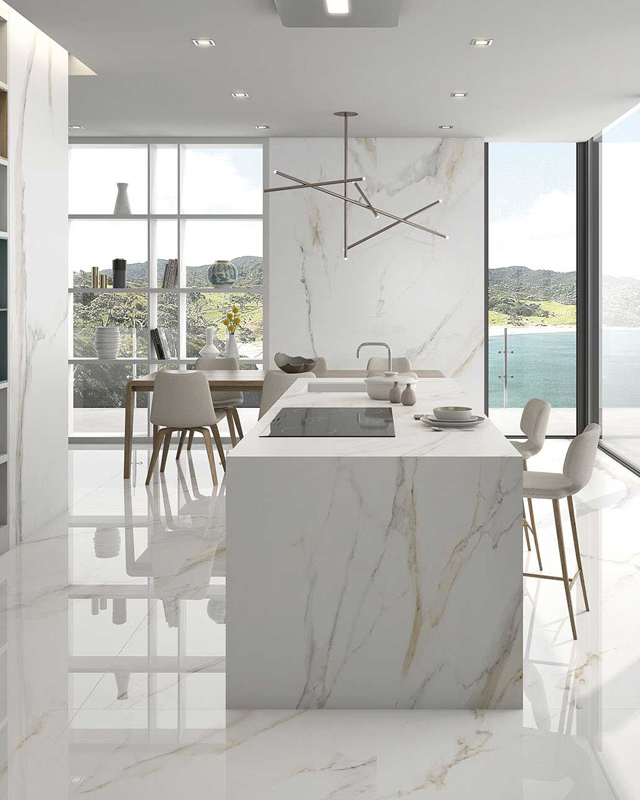
A marble-look or plain neutral backsplash keeps the kitchen calm and bright. It also lets colourful cabinets or appliances stand out.
Slab-Look Countertops
Porcelain slabs in 1200 x 1800 look like natural stone without the sealing and staining worries. They handle heat and knife marks far better than many soft stones.
A continuous slab across the counter and up the wall creates a clean, high-end kitchen with very few joins.
Durable Kitchen Floors
Kitchen floors need grip and easy cleaning. Matte or natural-finish porcelain in a mid-tone neutral hides everyday marks and stays safe underfoot.
Avoid high-gloss floors in the kitchen. Oil and water on a glossy surface turn slippery, which is a real hazard in a busy cooking space.
Open Kitchen Flow
In open-plan homes, the kitchen floor should flow into the living and dining area. Running the same large-format porcelain across both zones makes the whole space feel bigger and more connected.
Keep the colour consistent and let a change in cabinetry, not flooring, mark the shift between zones.
Colour and Finish Choices for Kitchens
Kitchens suit clean, bright colours that read as hygienic. White, light grey, and beige are the usual leads.
For finish, use matte or natural on the floor for grip and a subtle gloss or marble finish on the backsplash for easy cleaning and a lift of light. This mix of finishes is a running theme across good tile design, covered more in our guide on bathroom tile design trends using glossy and natural finishes.
Planning the Kitchen Alongside the Rest of the Home
An open kitchen shares sightlines with the living and dining areas, so its tiles cannot be chosen in isolation. The colours and finishes must sit well with the surrounding rooms.
Designers handle this with concept boards that group compatible tiles before ordering. Our guide on how designers use Rollence concept boards for projects shows how this keeps the kitchen and living zones in tune.
Common Kitchen Tile Mistakes
These errors are easy to avoid once you know them.
-
Using glossy tiles on the floor, which become slippery with oil and water.
-
Choosing small tiles for the backsplash, which adds grout lines right where oil splashes.
-
Picking a very light grout that stains quickly near the cooking zone.
-
Ignoring how the kitchen floor meets the living room floor in open layouts.
-
Skipping heat and scratch resistance in favour of looks alone.
Expert Tips for Kitchen Tiles
A few habits give a cleaner, longer-lasting result. Choose an epoxy or stain-resistant grout near the hob, since it holds up against oil far better than standard grout.
Run the backsplash in as large a format as the wall allows, so there are fewer joints to scrub. Keep 5 to 10 percent of tiles in reserve from the same batch for any future repair.
Building a Kitchen That Lasts
A good kitchen tile plan balances three things: easy cleaning, grip underfoot, and a look that flows with the rest of the home. Large-format porcelain covers all three when the sizes and finishes are chosen with care.
Rollence Granito produces large-format porcelain for floors, backsplashes, and slab countertops. Explore the range on the Rollence website and request samples to plan your kitchen project.
Frequently Asked Questions
Are large-format porcelain tiles good for kitchens?
Yes. Their low water absorption and fewer grout lines make them easy to clean and highly stain-resistant, which suits busy kitchens.
Which tile size is best for a kitchen backsplash?
600 x 1200 and 800 x 1600 give a near-seamless backsplash with minimal joints, which keeps the area behind the hob easy to wipe.
Can porcelain be used as a kitchen countertop?
Yes. Porcelain slabs in 1200 x 1800 resist heat, scratches, and stains, and they need no sealing, which makes them a strong countertop choice.
What finish is safest for a kitchen floor?
Matte and natural finishes give better grip and stay safer with oil and water on the floor. Avoid high-gloss floors in the kitchen.
Which tile colour suits a modern kitchen?
White, light grey, and beige read as clean and hygienic, and they let cabinets and appliances stand out.
How do I keep kitchen grout from staining?
Use an epoxy or stain-resistant grout near the cooking zone, and choose a mid-tone grout colour that hides marks better than pure white.

