



Best Tile Colour Combinations for Living Rooms
The living room is the room guests see first and family uses most. Its tile colours decide whether the space feels warm and inviting or cold and unfinished.
Getting the floor and wall colours to work together is the real skill. A single good tile can still look wrong next to the wrong wall.
This guide covers the best tile colour combinations for living rooms, using large-format porcelain that suits Indian homes. It builds on our wider pillar on tile design ideas for modern homes and commercial spaces.
How to Approach Living Room Colour Pairing
Start with the floor, since it is the biggest surface and the hardest to change. Pick the floor colour first, then build wall and accent colours around it.
A reliable formula is one calm base, one supporting tone, and one accent. Too many colours make a living room feel restless, so keep it to two or three.
If you want to understand the mood each colour carries before you pair them, our guide on tile colour psychology for interior spaces explains it in detail.
Best Tile Colour Combinations for Living Rooms
Here are combinations that hold up well over time and suit most Indian living rooms. Each one balances warmth, light, and a point of interest.
|
Floor colour |
Wall/accent |
Overall feel |
|---|---|---|
|
Beige marble-look |
White walls, wood accents |
Warm, classic, timeless |
|
Light grey |
White walls, charcoal accent wall |
Modern, sharp, urban |
|
Crema / cream |
Soft brown, brass fittings |
Cosy, elegant |
|
Statuario white |
Grey feature wall |
Clean, premium |
|
Warm beige |
Onyx feature wall |
Rich, welcoming with drama |
Each of these uses a calm floor and lets one surface carry the character. That balance is what keeps a living room from feeling flat or over-busy.
Beige Floor With White Walls and Wood
This is the safest and most popular combination for a reason. Beige hides dust, pairs with any furniture, and feels warm all day.
Add wood-tone furniture and the room feels grounded and comfortable. It is the combination that ages the best.
Light Grey Floor With a Charcoal Accent
For a modern city look, a light grey floor with mostly white walls feels clean and current. Then one charcoal accent wall gives the room depth.
This pairing suits apartments and works especially well with minimal, straight-line furniture.
Crema Floor With Warm Browns
If you want a cosy, layered living room, a crema floor with soft brown walls and brass or gold fittings feels elegant. It reads as warm and expensive without shouting.
This combination suits larger living rooms and family spaces that want a settled, lived-in feel.
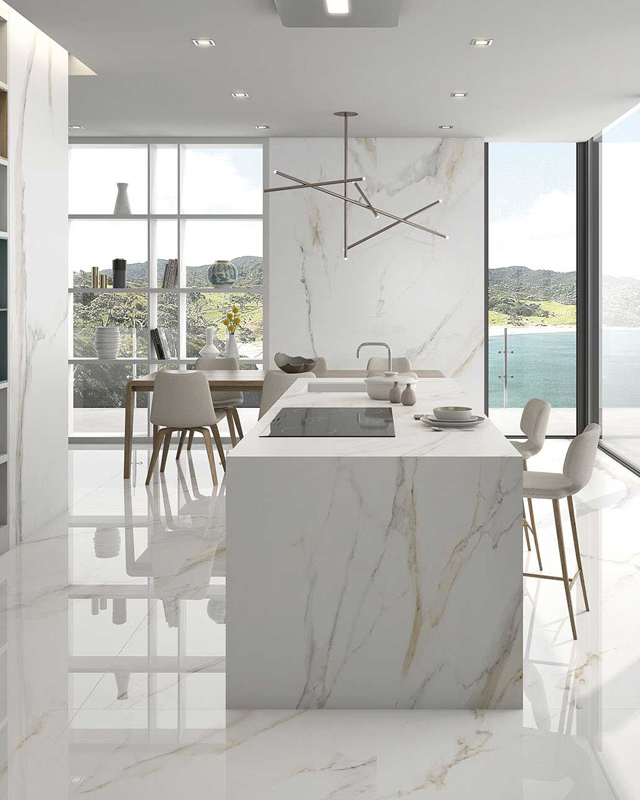
Statuario White With a Grey Feature
For a bright, premium look, a Statuario marble-look floor with a grey feature wall gives contrast without going dark. The white keeps the room open while the grey adds structure.
Large-format porcelain suits this look because fewer joints keep the marble pattern flowing. For big living areas and villa projects, Rollence supplies these formats as a 1200x1200 porcelain tiles supplier in iraq for continuous, slab-like floors.
Warm Beige With an Onyx Accent
When you want warmth plus drama, pair a warm beige floor with an Onyx feature wall behind the seating or TV. The beige keeps the room friendly while the Onyx adds richness.
Keep the accent to one wall. Onyx across a whole room can overwhelm a living space.
Floor and Wall Tile: How Much Contrast?
A common question is whether floor and wall should match or contrast. The answer depends on the size of the room.
For small living rooms, keep floor and walls close in tone so the space feels larger. For big living rooms, you can add stronger contrast through a feature wall without losing the sense of space.
Grout colour matters too. Match grout to the tile for a seamless floor, or contrast it if you want a defined grid.
Choosing Finishes for Living Room Tiles
Colour and finish work together. A glossy beige feels brighter and more formal, while a matte beige feels softer and more relaxed.
Most living rooms suit a subtle gloss or a natural finish on the floor, with a marble finish reserved for feature walls. Avoid full high-gloss floors in homes with children, since they show every mark.
Planning the Whole Scheme Together
Living room colour rarely stands alone. It has to flow into the dining area, passage, and open kitchen.
Designers plan this with concept boards that group compatible colours and finishes before ordering. Our guide on how designers use Rollence concept boards for projects shows how this keeps a home consistent.
Rollence organises porcelain into series such as Beige/Crema, Grey/Silver, Statuario, and Onyx, which makes it easy to pick colours that already work together.
Common Living Room Colour Mistakes
These slips turn a good plan into a disappointing result.
-
Choosing a floor colour without checking it against the wall paint.
-
Using more than three colours, which makes the room feel busy.
-
Going high-gloss on the floor in a family home with kids or pets.
-
Picking a very dark floor for a small, low-light living room.
-
Forgetting that open kitchens and dining zones must flow with the living colour.
Getting the Combination Right
The best living room colour combinations share one habit: a calm floor, a supporting tone, and a single point of interest. Keep to that and the room will feel finished, not fussy.
Rollence Granito produces large-format porcelain across the colour families in this guide. Explore the series on the Rollence website and request samples to test pairings in your own living room light.
Frequently Asked Questions
What is the best tile colour for a living room floor?
Beige and light grey are the most reliable living room floor colours. They stay neutral, hide dust, and pair with almost any furniture.
Should living room floor and wall tiles match?
In small rooms, keep floor and wall tones close for a larger feel. In big rooms, you can add contrast through a single feature wall.
Which colour combination looks most premium?
Statuario white with a grey feature, or warm beige with an Onyx accent, both read as premium while staying easy to live with.
Are grey floors good for living rooms?
Yes. Warm grey floors feel modern and pair well with white walls and wood furniture, especially in city apartments.
How many tile colours should a living room have?
Two or three at most. One calm base, one supporting tone, and one accent keeps the room balanced.
Which tile size suits a living room?
600 x 1200 and 800 x 1600 suit most Indian living rooms, while 1200 x 1200 works well for larger halls and villas.

