
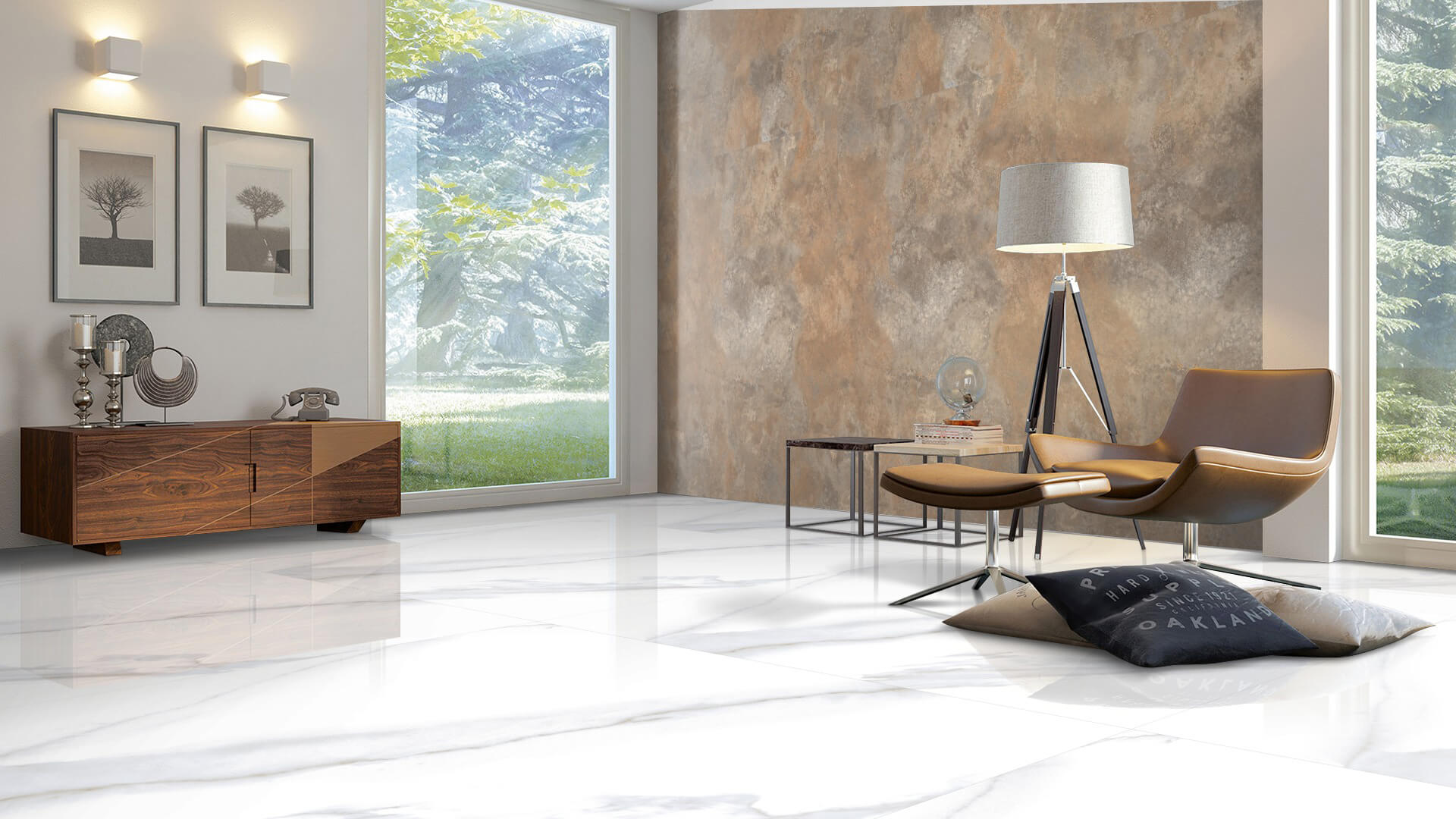



Porcelain Tile Care and Maintenance: Cleaning, Stains and Scratches
Porcelain tile care is easy if you know three things: what to use on it, what to keep away from it and how to look after the grout.
Porcelain tile care and maintenance is simple, because a BIa body absorbs 0.5% water or less and a glazed surface does not hold dirt the way a porous tile does. Dust, a damp mop and a neutral cleaner handle most days. The mistakes that damage a floor come from the wrong product: acid used daily, wax on a polished tile or a hard broom on a glossy surface.
This guide covers the first clean after laying, routine tile maintenance, a detergent table for twelve kinds of dirt, what to do about scratches, care by finish and grout care. It is written for Rollence GVT and PGVT tiles made at the factory in Matel, Wankaner, Morbi, Gujarat, and the same advice holds for most glazed vitrified tiles.
Tile care and maintenance is also a budget matter. Morbi GVT costs about Rs. 60 to Rs. 140 per sq.ft in the market, and PGVT about Rs. 70 to Rs. 180 per sq.ft, so a floor that stays in good shape saves a replacement. These are market ranges and not a Rollence quote. Rollence tiles also carry a stain resistance rating of class 4 to 5.
Initial Tile Care After Laying
The first step of tile care is a clean that removes cement haze, adhesive specks and dust left by the fitter. Wait until the grout has cured, which is a few days for cement grout and longer for epoxy grout, then work in this order.
Remove loose dirt
Sweep or vacuum the coarse dust, grit and offcuts. Grit under a mop scratches the surface.
Wet the floor with clean water
Wetting first stops the cleaner from soaking into the grout and staining it.
Apply a suitable detergent with a cloth
For cement haze, use an acid detergent diluted as the label says, and test a hidden spot first. Wipe or mop the area.
Rinse with warm, clean water
Rinse until no foam is left. Leftover cleaner leaves a film that attracts dirt.
Scrub stubborn specks
Use a soft brush on build-up and specks. Then let the floor dry.
Acid cleaners should not be used for daily cleaning or on cement grout unless the grout maker approves them, because acid dulls polished glaze and eats into the joints. For grout and glazed tiles, use a non-acidic, anti-bacterial cleaner. Never mix bleach with an acid cleaner.
Ask the grout supplier which cleaner suits the grout you used, since some sealants are not acid resistant. A tile with a stain resistance of ISO 10545-14 class 4 to 5 wipes clean easily, but only if dirt does not dry on for weeks.
Routine Tile Maintenance
Daily
Dust with a soft dry mop or a vacuum. Use door mats at every entrance, because most scratches start with grit carried in on shoes.
Weekly
Damp mop with a neutral cleaner in clean water. Rinse the mop often and finish with a dry cloth on shiny floors.
Every few months
Scrub the grout lines and check that no joint has cracked or opened, especially before the monsoon.
Tile maintenance is mostly about not letting dirt build up, and good porcelain tile care starts with that habit. Clean the grout once in a while to keep it well maintained and keep its colour. In bathrooms, a squeegee after bathing stops soap scum from forming, and in kitchens a quick wipe after cooking stops oil from drying on the joints.
Tile Maintenance: Which Cleaner for Which Stain
Match the cleaner to the dirt, which is the core of tile maintenance. The table lists the detergent type Rollence recommends for each kind of mark. Test on a hidden corner first, rinse well and never mix two cleaners.
| Type of dirt | Type of detergent |
|---|---|
| Grease and oil | Alkaline detergent |
| Ink | Sodium hypochlorite solution (bleach) or acid detergent |
| Rust | Acid detergent |
| Limescale and cement build-up | Acid detergent |
| Beer, wine, coffee | Bleach solution or alkaline detergent |
| Tyre marks | Organic solvent (trichloroethylene, thinner) |
| Ice cream | Alkaline detergent |
| Resin | Organic solvent (white spirit, thinner) |
| Fruit juice | Diluted bleach solution |
| Permanent marker | Organic solvent (acetone, thinner) |
| Aluminium scratch marks | Acid detergent or abrasive cream or powder |
| Other stains | Abrasive cream detergent |
Solvents such as thinner and acetone are for the glazed tile only, and should be kept off the grout and off any sealant. Open the windows when you use them and rinse the area with clean water afterwards.
Tile Scratch Repair: What Works and What Does Not
Most marks that look like scratches are not scratches. A grey streak left by an aluminium bed leg, a pan or a chair is metal rubbed onto the glaze, and it cleans off. A true scratch, cut into the glaze, cannot be polished out of a glazed tile, so tile scratch repair is about telling the two apart.
| Mark | What it is | What to do |
|---|---|---|
| Grey streak from metal | Metal rubbed onto the glaze | Rub gently with abrasive cream, then rinse and dry |
| Fine scuffs on polished PGVT | Surface wear from grit | Clean with a mild cleaner and soft cloth, and avoid abrasives |
| Chipped edge or corner | Impact damage | Fill with colour-matched epoxy filler |
| Deep scratch through the glaze | Damaged glaze | Seal with epoxy filler or replace the tile |
Prevention is the cheapest tile care there is, and it costs nothing. Fit felt pads under furniture, lift heavy items instead of dragging them, and keep grit out with mats. Spare tiles from the same batch make a replacement invisible, so keep about 10% extra when you place the order.
Tile Care by Finish: Matt, Glossy and Textured
Matt finishes
Mop with a neutral cleaner and rinse. Matt tiles hide marks better, but a film of cleaner shows as a haze, so rinse well.
Glossy and high gloss
Dust with a soft mop, not a hard broom. Use a mild cleaner, avoid wax or oil based cleaners and dry with a clean cloth to stop water spots.
Textured finishes
Dirt sits in the grooves, so go over the floor with a soft nylon brush once a week and rinse well.
Polished PGVT walls
Wipe with a damp soft cloth and a mild cleaner. PGVT is for walls only, so there are no floor marks to worry about.
Textured floors collect more dirt than flat ones, which is why carving tiles and anti skid tiles need a brush and not only a mop. The tile care routine is the same for every finish apart from the tools you use.
Tile Care for Grout in a Gujarat Monsoon
Grout is the weak spot of any tile floor. Cement grout absorbs water through a Gujarat monsoon, stains and grows mould in damp corners. Epoxy grout does not absorb water, oil or cleaner, so it stays clean in bathrooms, balconies and kitchens, and it costs more per kg but saves repeated scrubbing.
Fewer joints mean less grout to clean and simpler tile care, which is one reason large format tiles are easier to keep clean than a 600x600 mm floor. For cement grout, clean the lines with a soft brush and a neutral cleaner, and avoid acid unless the grout maker approves it. If a joint cracks or opens, rake it out and fill it again before the monsoon.
Order Spare Boxes Early
Spare tiles from the same batch are the easiest repair there is, because shade differs between production runs. Rollence Granito delivers free samples to your door, and a quotation request can include about 10% extra boxes that you keep sealed for later repairs.
Quick Facts on Tile Care from Morbi
How should I clean a porcelain tile floor?
Sweep, damp mop with a neutral cleaner, rinse and dry. A 600x600 mm or 600x1200 mm (2x4 ft) GVT floor from Morbi, which sells at about Rs. 60 to Rs. 140 per sq.ft, needs nothing more on most days. The body absorbs 0.5% water or less, so spills wipe off. Use epoxy grout in wet areas.
How do I look after tiles through the Gujarat monsoon?
Keep joints sealed and floors dry. In Gujarat's monsoon, damp climbs into cement grout and not into the tile, because the body absorbs 0.5% water or less. An 800x1600 mm (2.6x5.2 ft) tile has fewer joints, and epoxy grout in the rest keeps them clean. IS 15622 is the reference for vitrified tiles made in Morbi.
Frequently Asked Questions
How often should I clean porcelain tile floors?
Dust daily and mop weekly. A dry mop or vacuum takes grit off the floor every day, and a damp mop with a neutral cleaner removes the film left by feet and cooking. Bathrooms and kitchens may need a wipe after each use to stop soap scum and oil.
Can I use acid to clean porcelain tiles?
Only for the first clean after laying, for rust and for limescale. Dilute it as the label says, test a hidden spot and rinse well. Acid should not be used daily, because it dulls polished glaze, and it can damage cement grout.
How do I remove rust or limescale from a tile?
Use an acid detergent, diluted as the label says, applied with a cloth on the stain only. Leave it for a few minutes, scrub gently, then rinse with plenty of clean water. Test a hidden corner first and keep the acid off cement grout.
Can scratches on porcelain tile be repaired?
Only some of them. Metal streaks come off with abrasive cream, but a scratch through the glaze cannot be polished out. Chips can be filled with colour-matched epoxy filler, and a badly damaged tile is best replaced with a spare from the same batch.
What should I avoid when cleaning glossy tiles?
Avoid wax or oil based cleaners, hard-bristle brooms and abrasive powders. Wax leaves a greasy film and a hard broom leaves fine scratches on a shiny glaze. Use a soft mop and a mild cleaner, then dry with a clean cloth to prevent water spots.
How do I clean grout between tiles?
Scrub the lines with a soft brush and a neutral cleaner, then rinse. Epoxy grout needs only this. Cement grout stains more, so clean it more often and avoid acid cleaners unless the grout maker says they are safe for that product.
Does porcelain tile need sealing?
No, a porcelain body absorbs 0.5% water or less, so the tile itself does not need sealing. Cement grout between the tiles may need a grout sealer, because it absorbs water and stains. Epoxy grout needs no sealer, which makes porcelain tile care easier.
Related Rollence Pages
Quality Tests
Stain resistance and other ISO 10545 values
Open pageLarge Format Guide
Fewer joints and what changes on site
Open pagePorcelain vs Vitrified Tiles
Why a BIa body is easier to keep clean
Open pageGlossy Finish Tiles
Dry room shine and how to keep it bright
Open pageGHR + Punch Finish
Textured anti skid tiles for wet floors
Open pageTile Calculator
Work out spare boxes and total quantity
Open page