


India is the world's second-largest ceramic tile producer, and almost all of that scale sits in one district. According to IBEF, India produced 2,450 million sq mtr of ceramic tiles in 2023, accounting for about 15.4 percent of world production, and Morbi in Gujarat alone accounts for up to 90 percent of the country's ceramic tile output across more than 1,800 manufacturing units.
Rollence Granito, a 1200x1200 porcelain tiles supplier in Iraq and across Indian metros, sits at the premium, large-format porcelain end of this same Morbi cluster. This guide ranks the top 10 ceramic tiles manufacturers in India, explains ceramic tile price per sq ft, covers how ceramic differs from vitrified and porcelain, and shows where a buyer needs to move up to a higher tile category.
What Are Ceramic Tiles and How They Differ from Vitrified and Porcelain Tiles
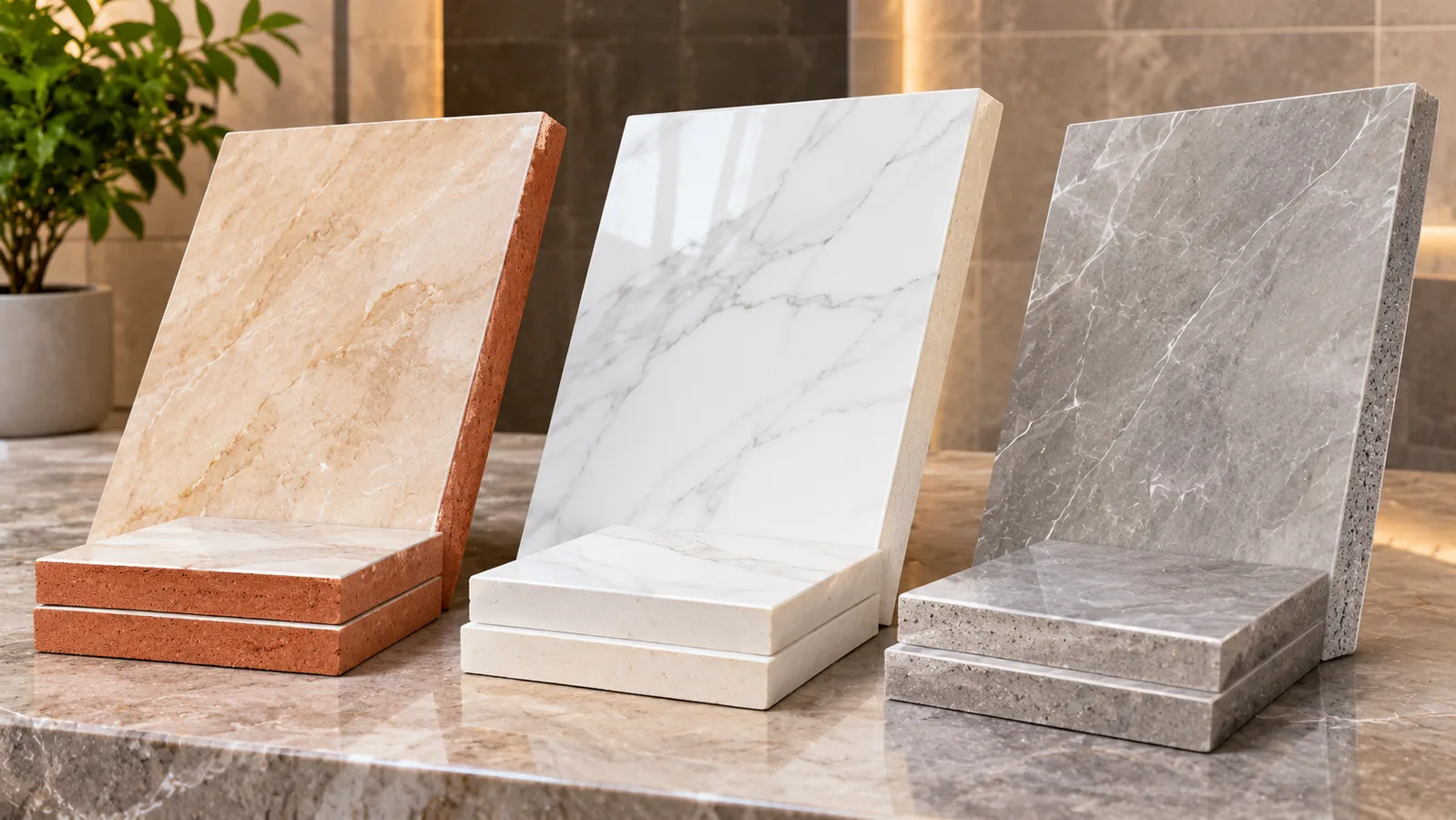
Tiles sold in India are graded mainly by water absorption, following the international ISO 13006 classification system. Ceramic tiles sit in the higher water absorption bands, generally above 3 percent and often well above 10 percent for wall-only tiles, which is why they are made mainly for walls or light-duty residential floors rather than heavy-traffic areas.
Vitrified and porcelain tiles sit at the low end of the same scale, with water absorption at or below 0.5 percent, which gives them far higher strength and stain resistance. Our full breakdown of ceramic vs porcelain vs vitrified tiles: what's the difference covers this comparison end to end.
Red body vs white body. Most Indian ceramic tiles use a red clay body, which is cheaper and widely available, while premium wall tile ranges often use a white body base that holds sharper digital prints and a brighter background colour.
The table below lines up ceramic against vitrified and porcelain on the specifications that actually decide where each one can be used.
|
Tile Category |
Water Absorption |
Typical Use |
Approx Price Band |
|
Ceramic |
Above 3 percent, often above 10 percent for wall tiles |
Walls, light residential floors |
Rs. 20 to Rs. 65 per sq ft |
|
Vitrified (GVT, double charge, full body) |
0.5 percent or below |
Floors, medium to high traffic |
Rs. 45 to Rs. 190 per sq ft |
|
Porcelain (PGVT, large format) |
0.5 percent or below, denser body |
Premium floors, walls, commercial cladding |
Rs. 100 to Rs. 280 per sq ft |
How We Ranked These Ceramic Tile Manufacturers
Rankings below weigh plant certification (ISO 9001 and ISO 14001), production capacity, size and design range, dealer network reach, and how transparent each manufacturer is with pricing for bulk buyers. Our wider look at top 10 tiles companies in India 2026, ranked by quality, range and export strength applies a similar framework across the full tile category, not ceramic alone.
Top 10 Ceramic Tiles Manufacturers in India (2026)
|
Brand |
Headquarters |
Plants |
Specialty |
Price Band (per sq ft) |
|
Kajaria Ceramics |
Delhi |
Rajasthan, UP, Andhra Pradesh, Gujarat |
Widest ceramic wall and floor catalogue in India |
Rs. 30 to Rs. 90 |
|
Somany Ceramics |
Delhi |
Kadi, Kassar, Chennai |
Broad ceramic and digital wall tile range |
Rs. 28 to Rs. 85 |
|
Orient Bell |
Delhi |
Uttar Pradesh, Gujarat, Andhra Pradesh |
Ceramic floor and wall tiles for mid-market housing |
Rs. 25 to Rs. 75 |
|
Johnson Tiles (H&R Johnson) |
Mumbai |
Gujarat, Karnataka, Andhra Pradesh |
Legacy ceramic ranges with strong dealer trust |
Rs. 30 to Rs. 95 |
|
Nitco |
Mumbai |
Maharashtra |
Premium ceramic and stone-look tiles |
Rs. 35 to Rs. 110 |
|
Asian Granito India |
Ahmedabad |
Gujarat (including Morbi) |
Ceramic, GVT, PGVT and sanitaryware |
Rs. 28 to Rs. 90 |
|
Simpolo Vitrified |
Morbi |
Morbi, Gujarat |
Ceramic wall tiles plus large vitrified slabs |
Rs. 27 to Rs. 85 |
|
Varmora Granito |
Wankaner, Morbi |
Morbi, Gujarat |
Ceramic and vitrified tiles, export focus |
Rs. 27 to Rs. 90 |
|
Regency Ceramic |
Morbi |
Morbi, Gujarat |
Budget to mid-range ceramic wall and floor tiles |
Rs. 20 to Rs. 60 |
|
Sunheart Vitrified |
Morbi |
Morbi, Gujarat |
Ceramic and double-charge vitrified tiles |
Rs. 22 to Rs. 65 |
Kajaria Ceramics carries the widest dealer network of any ceramic tile brand in India, which makes it the easiest name to buy off the shelf in almost any city, though catalogue depth varies more by showroom than with a factory-direct buyer.
Somany Ceramics competes closely with Kajaria on range and reach, with a particular strength in digital wall tile design across its Kadi and Kassar plants.
Orient Bell focuses on mid-market housing projects and works well for builders ordering in volume for standard 1BHK and 2BHK flats.
Morbi-based names such as Regency Ceramic and Sunheart Vitrified compete mainly on price, since factory-direct rates from Morbi typically undercut branded showroom pricing once freight is worked in, which matters most for large bulk or project orders.
Ceramic Tiles Manufacturers in Morbi, Gujarat
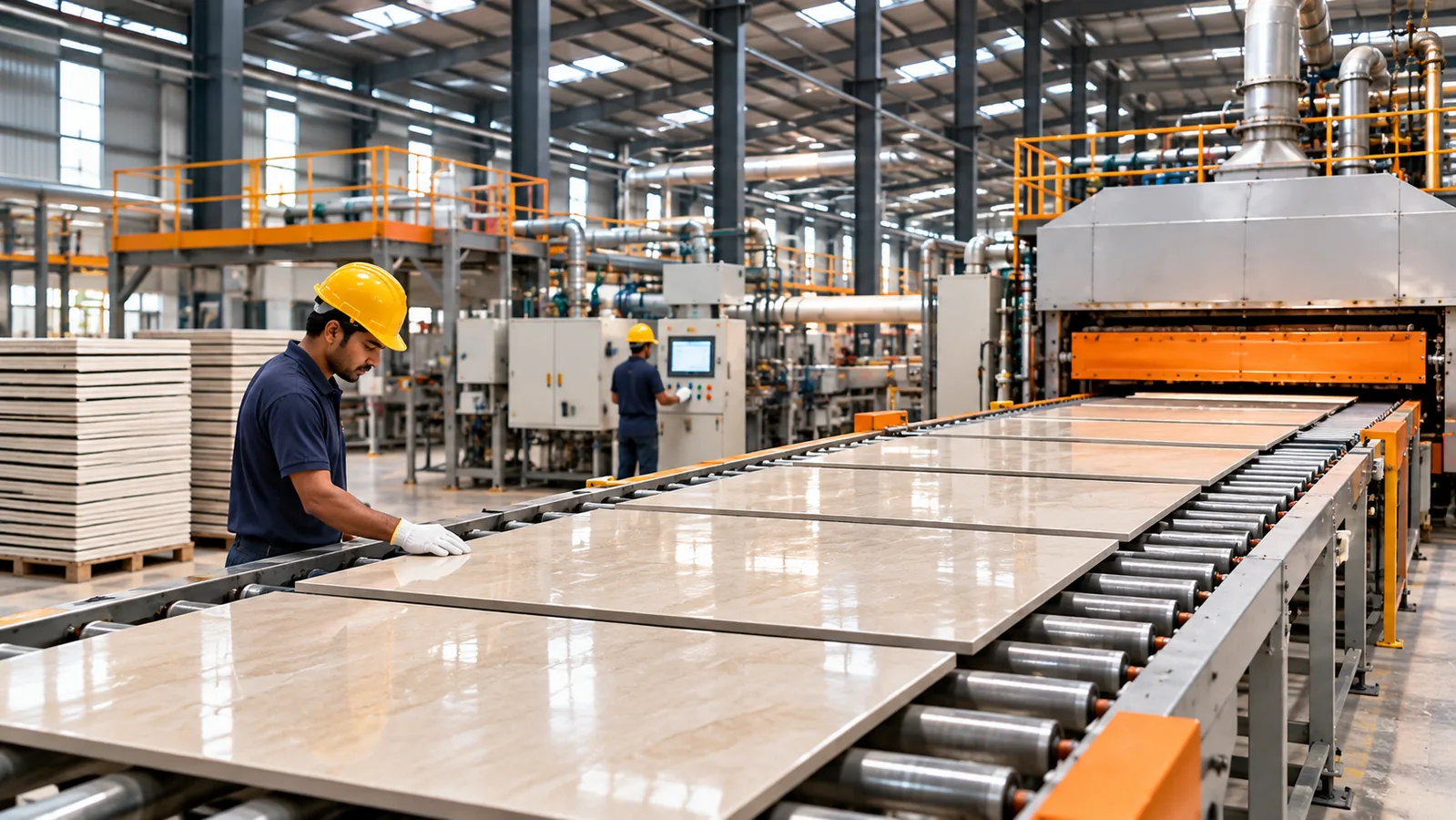
Most of the brands above either operate a Morbi plant directly or source significant capacity from the cluster, since Morbi's gas pipeline infrastructure, raw material access and skilled labour base keep production costs lower than almost anywhere else in India. This is also why Morbi factory-direct rates on ceramic tiles often beat distributor pricing in other cities by a noticeable margin.
When Ceramic Is Not Enough: Moving Up to Porcelain
Ceramic tiles are not built for heavy-traffic commercial floors, outdoor areas or large-format seamless layouts, since their higher water absorption limits strength and slip performance under sustained load. Rollence Granito, though not a ceramic wall tile maker, fills this gap with large-format GVT and PGVT porcelain tiles up to 1200x1800 mm across the Statuario, Onyx, Grey/Silver and Beige/Crema series, produced under ISO 9001:2015 and ISO 14001:2015 certification for both domestic and export orders. Our note on why Rollence Granito vitrified tiles meet export grade standards covers what that certification actually verifies.
Ceramic Tile Price per Sq Ft in India (2026)
Ceramic tile rates vary sharply by size, application and finish, and buyers often underestimate how much the intended use changes the price. Wall tiles price generally runs lower than floor-rated ceramic of a similar size, since wall tiles use a thinner body and less raw material. Our comparison of large tiles vs small tiles: cost, installation and design impact explains how size specifically moves the final rate.
|
Application |
Common Size |
Ceramic Tile Price per Sq Ft |
|
Wall tiles (kitchen, bathroom) |
300x450 mm |
Rs. 20 to Rs. 45 |
|
Wall tiles, digital print |
300x600 mm |
Rs. 30 to Rs. 60 |
|
Floor tiles, light residential |
400x400 mm |
Rs. 25 to Rs. 50 |
|
Floor tiles, standard residential |
600x600 mm |
Rs. 35 to Rs. 65 |
|
Kitchen backsplash, digital |
300x450 to 300x600 mm |
Rs. 30 to Rs. 65 |
|
Bathroom wall and floor combo |
300x300 to 300x450 mm |
Rs. 25 to Rs. 55 |
What moves ceramic tile rates. Digital print complexity, glaze quality, brand dealer margins and order volume all shift the final ceramic tiles price. Buying a full truckload directly from a Morbi manufacturer typically brings the rate down by 10 to 20 percent compared to a small retail quantity bought through a city showroom.
Ceramic Tile Types and Best Uses by Room
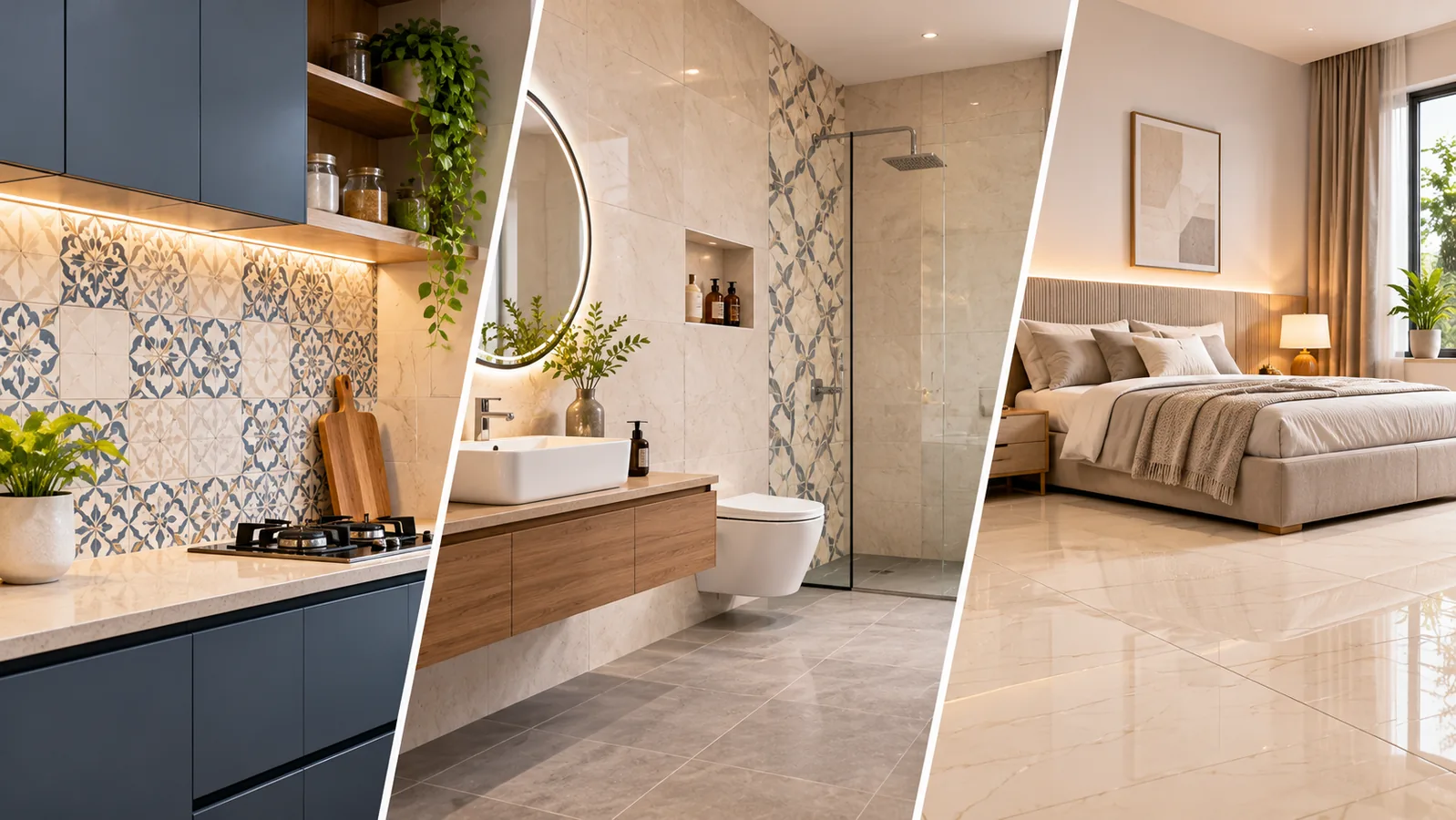
Kitchen walls and backsplashes. Digital ceramic wall tiles in 300x450 mm or 300x600 mm work well here, since they resist grease staining when properly glazed and are easy to wipe clean.
Bathroom walls and floors. Ceramic works for bathroom walls, but floor tiles in wet areas need a matt or textured ceramic with a suitable anti-slip rating rather than a glossy finish.
Bedrooms and low-traffic living areas. Ceramic floor tiles in 400x400 mm or 600x600 mm suit rooms with light daily footfall, though most buyers today prefer vitrified even here for its added strength.
Where not to use ceramic. Open outdoor areas, building exteriors, and high-traffic commercial floors such as retail stores, offices and hospitality lobbies need full-body vitrified or porcelain tiles instead, since ceramic's higher water absorption makes it prone to cracking under heavy load and weather exposure.
Common Mistakes to Avoid When Buying Ceramic Tiles
Confusing wall-rated tiles with floor-rated tiles. A thin ceramic wall tile is not built to carry foot traffic. Laying one on a floor leads to early cracking, so always confirm the tile is rated for floor use before ordering for that purpose.
Ordering without a breakage allowance. Buyers who order the exact measured area often run short after cutting waste, and matching the missing quantity later from a new batch rarely gives an identical shade.
Skipping the physical sample. Catalogue photos and in-store lighting both distort true tile colour. A sample piece taken home and viewed under the room's actual lighting avoids a costly surprise after installation.
How to Buy Ceramic Tiles: Grade, Batch and Bulk Order Tips
A few checks before finalising an order prevent most of the common problems buyers run into with ceramic tiles. Our practical checklist on how to check tile quality before buying: a practical buyer's guide applies to ceramic just as much as porcelain.
Check the grade. Ceramic tiles are commonly sold in Grade 1 (first quality, no visible defects) and Grade 2 or Grade 3 (minor surface or dimension variations). Always confirm which grade a quoted rate refers to.
Match the batch number. Shade can vary slightly between production batches. For a single room or project, ask the dealer to supply tiles from one batch to avoid visible colour mismatch across the floor or wall.
Add a breakage allowance. Order 5 to 10 percent extra tiles beyond the exact area measured, to cover cutting waste and breakage during transport and installation.
Compare dealer vs factory-direct pricing. For orders above roughly 1,000 sq ft, it is worth getting a factory-direct quote from a Morbi manufacturer alongside the local dealer price, since the gap can be significant on bulk orders.
Frequently Asked Questions
Which is the best ceramic tile brand in India?
Kajaria and Somany lead by dealer reach and catalogue size, while Morbi-based brands such as Regency and Sunheart Vitrified offer strong value for budget-conscious bulk buyers. The right choice depends on budget, design needs and order volume.
What is the difference between ceramic and vitrified tiles?
Ceramic tiles have higher water absorption, generally above 3 percent, and are made mainly for walls or light-duty floors. Vitrified tiles absorb 0.5 percent or less water, making them stronger and suitable for heavier floor traffic.
What is the price of ceramic tiles per sq ft?
Ceramic wall tiles typically range from Rs. 20 to Rs. 60 per sq ft, while ceramic floor tiles range from about Rs. 25 to Rs. 65 per sq ft, depending on size, brand and finish.
Are ceramic tiles good for kitchen and bathroom walls?
Yes, ceramic wall tiles work well for kitchens and bathrooms since they resist grease and water staining when properly glazed, and their lighter body suits wall installation better than heavier vitrified tiles.
Which city is the hub of ceramic tile manufacturing in India?
Morbi in Gujarat is the hub, producing up to 90 percent of India's ceramic tiles across more than 1,800 manufacturing units, according to IBEF.
How long do ceramic tiles last?
Ceramic wall tiles typically last 15 to 20 years with normal care, while ceramic floor tiles in light-traffic areas can last a similar span, though heavy-traffic floors benefit more from vitrified or porcelain for long-term durability.
Ready to Move Beyond Ceramic to Large-Format Porcelain
For walls, kitchens and light-traffic rooms, ceramic tiles from the brands above remain a sound, budget-friendly choice. For floors that need to handle heavier traffic or a seamless large-format look, Rollence Granito manufactures GVT and PGVT porcelain tiles up to 1200x1800 mm. For samples, pricing or bulk project quotes, get in touch with our team at Rollence Granito, porcelain tiles manufacturers based in Matel, Wankaner, Gujarat.
Featured Tile Designs





Ready to Secure High-Performance Tiles for Your Project?
Get physical samples across our premium porcelain series, plus access to expert advice, to lock your scheme with confidence.